Event
AI and Interior Design: Thoughts from the Metropolis Roundtable
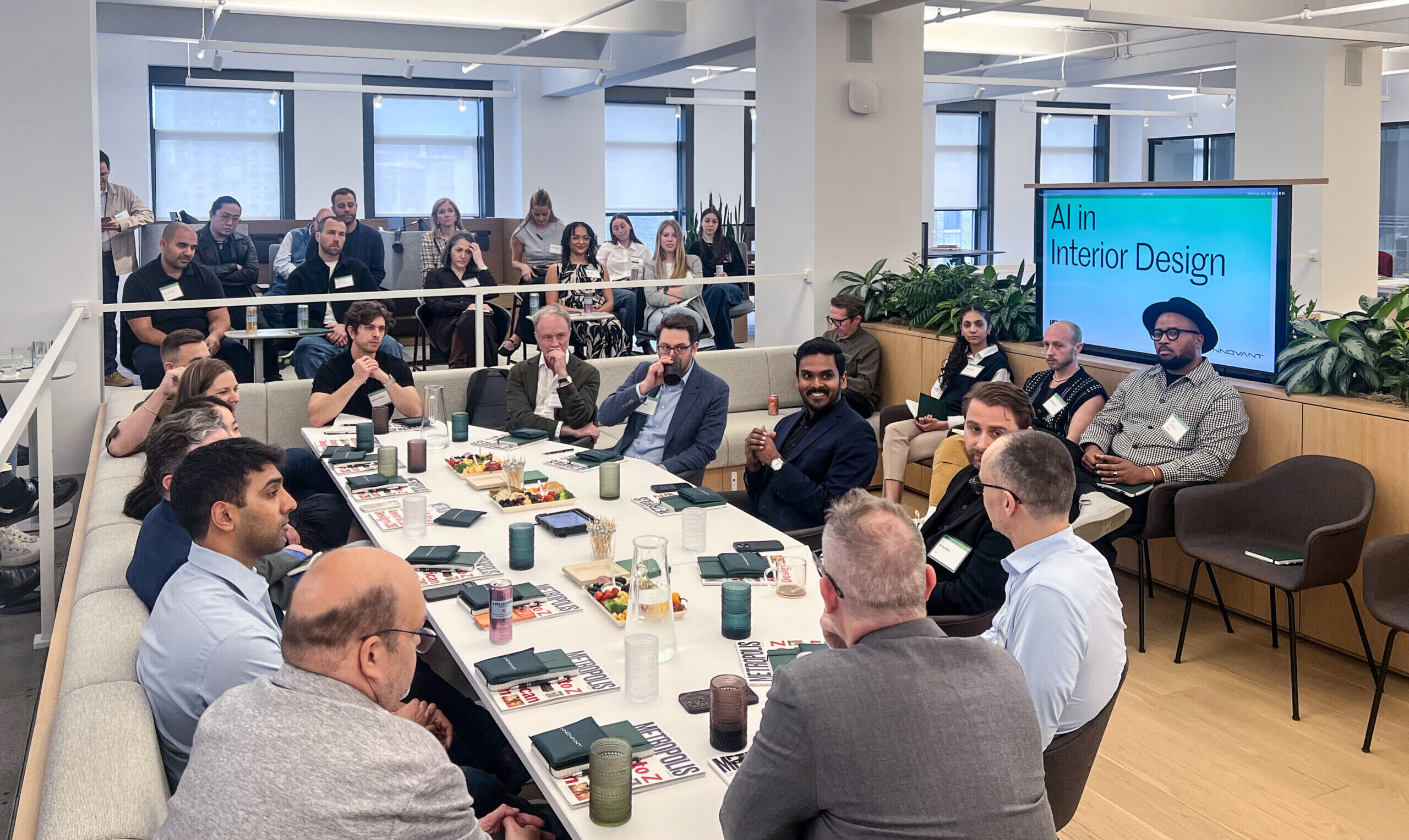
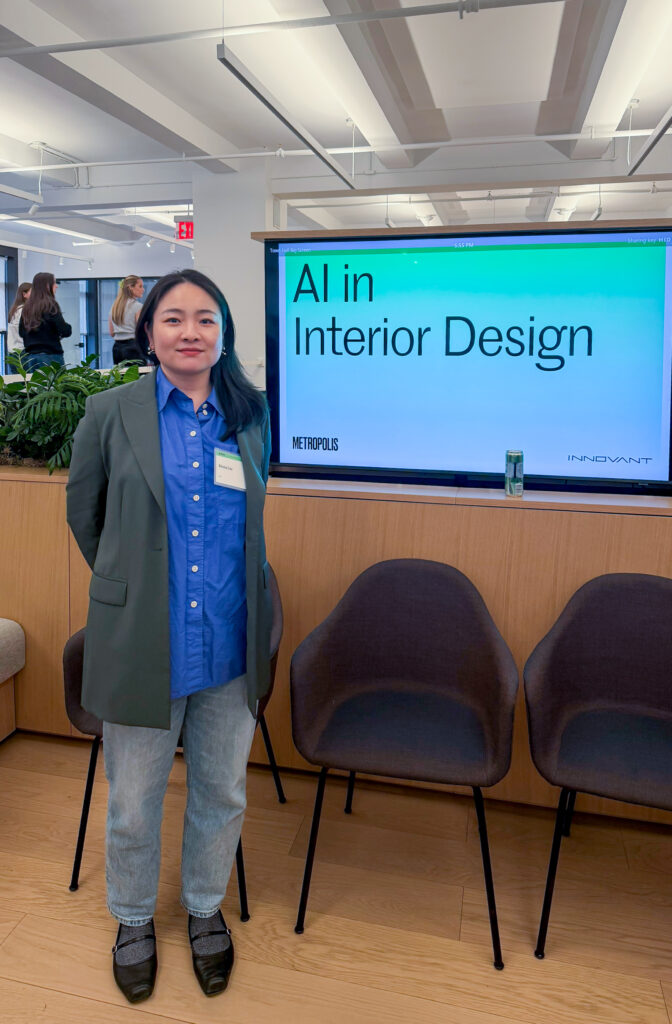
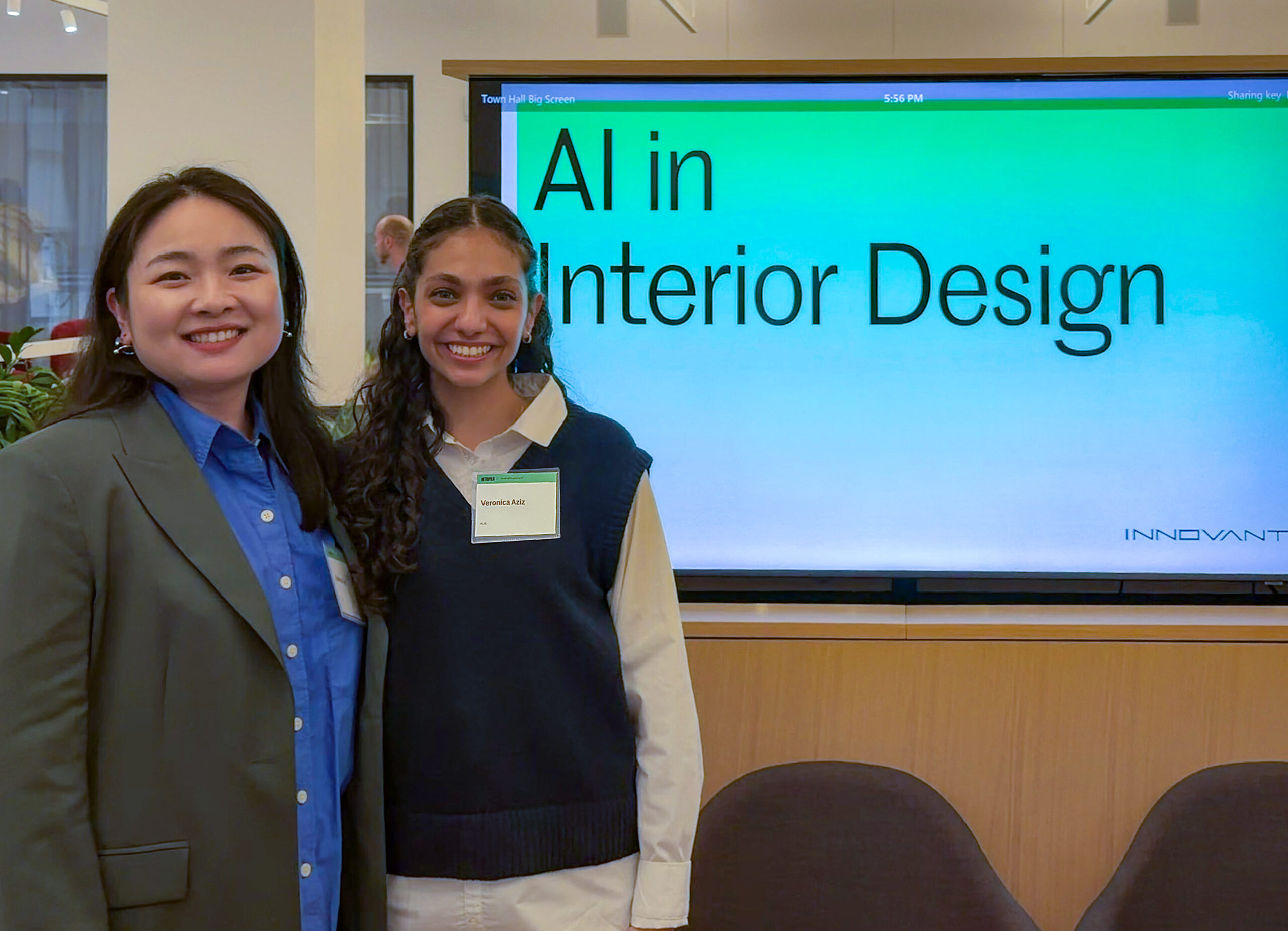
This week I had the chance to join a Metropolis roundtable on AI in interior design, alongside leaders from firms like Corgan, Perkins Will, IA, Gensler, Elkus Manfredi and HKS.
The conversation quickly made something clear: the industry is in a strange transitional moment. AI is no longer something we experiment with, but it’s not yet fully integrated in our day-to-day work either. One participant described it as a kind of “Xerox moment” for the profession – a technology that initially looks like a productivity tool, but slowly starts reshaping how work is produced, valued, and even defined. While the conversation ranged widely, a few ideas stood out to me.
First is how firms are actually adopting AI. Some firms, mostly due to size and capacity, are building centralized governance structures; internal committees that evaluate tools, manage security, and ensure data privacy. In these environments, AI adoption is tightly controlled. On the other hand, smaller firms tend to approach it with a “Wild West” ethos. Designers experiment freely with new tools to stay competitive, often without formal oversight.
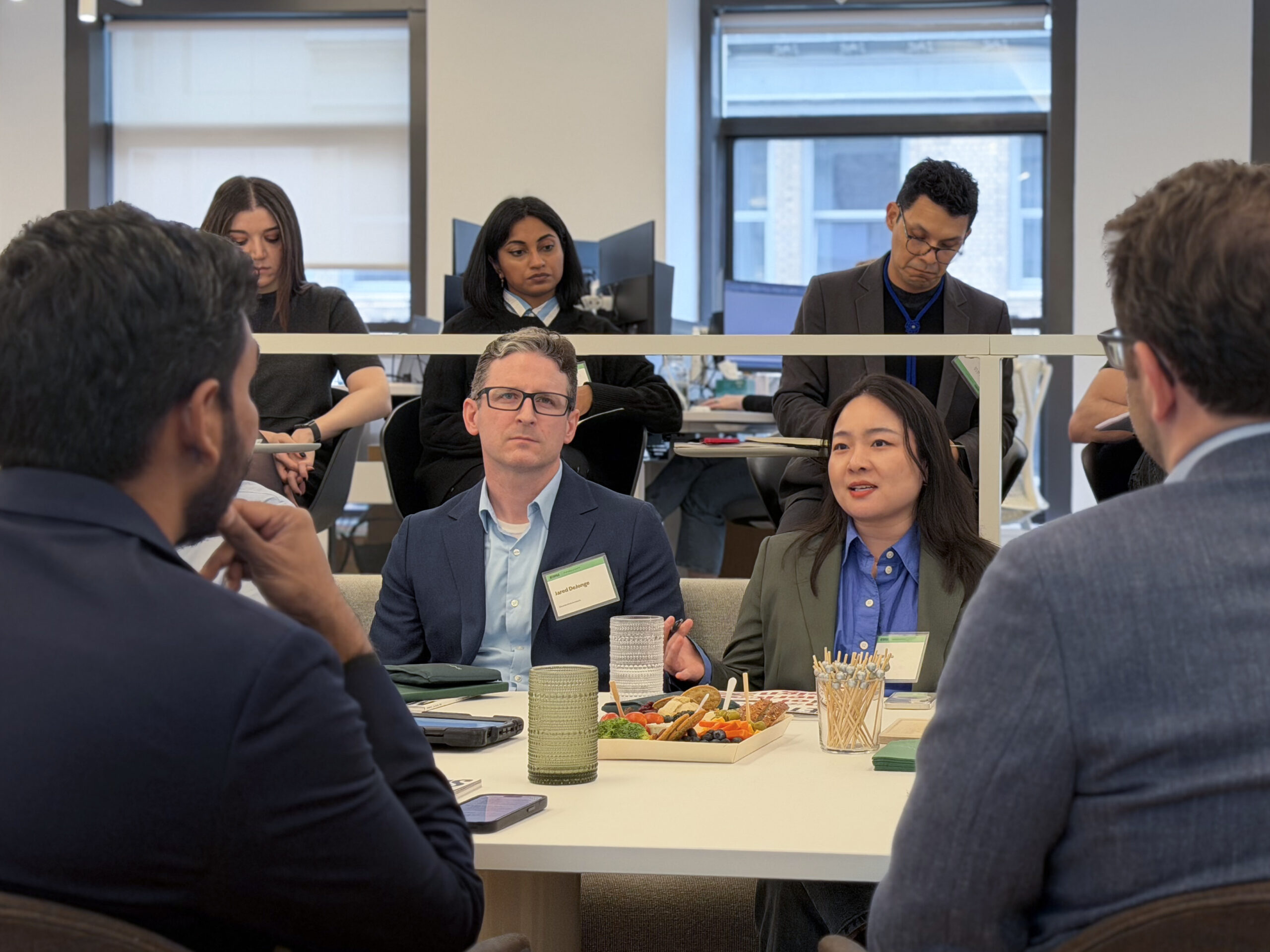
At HLW, the reality sits somewhere in between but closer to the enterprise side. Any AI implementation has to integrate with firm infrastructure under the protection of enterprise level security: authentication systems, security protocols, monitored environments. Without that foundation, adoption becomes risky very quickly.
One major concern across the board is the role of human expertise in the age of AI, in particular about how it affects junior designers. Someone compared it to “bringing a calculator into a math test.” If AI handles too much of the work, will younger designers still develop the judgment and taste that comes from struggling through the process?
For me, the issue isn’t just educational, it’s also legal. Current case law around AI-generated work suggests that without clear evidence of human involvement, firms may have limited intellectual property rights to the output. That means the “human in the loop” isn’t just philosophical, it may become a legal requirement for protecting creative ownership.
It also indicates a deeper philosophical question of what creativity is. Traditional design and creative workflows are iterative: the mind and the hand constantly inform each other. Sketching leads to thinking, which leads to another sketch. But many AI workflows collapse this loop into a single prompt and a single output.
To preserve the craft of design, I believe we need to intentionally split AI workflows into multiple stages. Instead of a one-click result, designers should intervene repeatedly throughout the process: guiding, editing, and reframing the outputs.
Another concern I shared with the group is the Limits of “Surface-Level” AI. Right now, most AI tools in design operate on what I would call surface-level data: they generate images, produce text, and remix references, but they rarely engage with the deeper structures that actually shape design decisions. To me, what’s missing is structured data about how spaces perform.
Imagine using sensors, occupancy tracking, or even eye-tracking to understand how people actually experience a space. That data could feed into AI systems that help designers evaluate whether a design is not just visually appealing but measurably effective. In other words, we could start to quantify what “good design” actually means.
Interestingly, the moderator pushed back on this idea. They suggested that AI might actually free designers from data-heavy approaches and allow them to focus more on storytelling and narrative.
Both perspectives are probably valid. But I’m personally interested in how data and design intuition might reinforce each other, rather than compete.
The conversation eventually turned toward a bigger question: What exactly are designers selling in an AI world?
The traditional model of billing for hours of production starts to break down when AI can generate dozens of iterations in minutes. Several participants suggested that firms will need to shift toward charging for vision, strategy, and decision-making, rather than production time. If designers can demonstrate that their work produces measurably better outcomes, that expertise becomes more valuable, not less. In that sense, AI might push the profession to clarify something that has always been true: The real value of design isn’t faster delivery. It’s better ideas.
The roundtable ended with a feeling of cautious optimism. AI can aggregate information, generate possibilities, and visualize ideas at unprecedented speed. But it still cannot replace the human experience of space, or the intuition that allows designers to form hypotheses about how environments shape behavior.
Perhaps the real opportunity is this: If AI can automate parts of the process, it might give designers something incredibly valuable back: time. And in a profession built on imagination and speculation, that might be the most powerful tool of all.