Event
Designing Beyond Carbon: Natural Materiality and Climate-Conscious Design at New York Build Expo 2026
The future of the built environment will be defined not by a single innovation, but by a collective shift in how we think about design, materials, and impact. At this year’s New York Build Expo, BEYOND’s Allison Bernett and Katia Lucuy joined industry leaders to explore two interconnected themes shaping that future: the return to natural materiality and the growing imperative to design with carbon in mind.
Together, their conversations highlighted a powerful truth: the decisions we make today about materials, systems, and existing buildings have lasting implications for both human wellbeing and planetary health.
Reconnecting Buildings to Nature Through Materiality
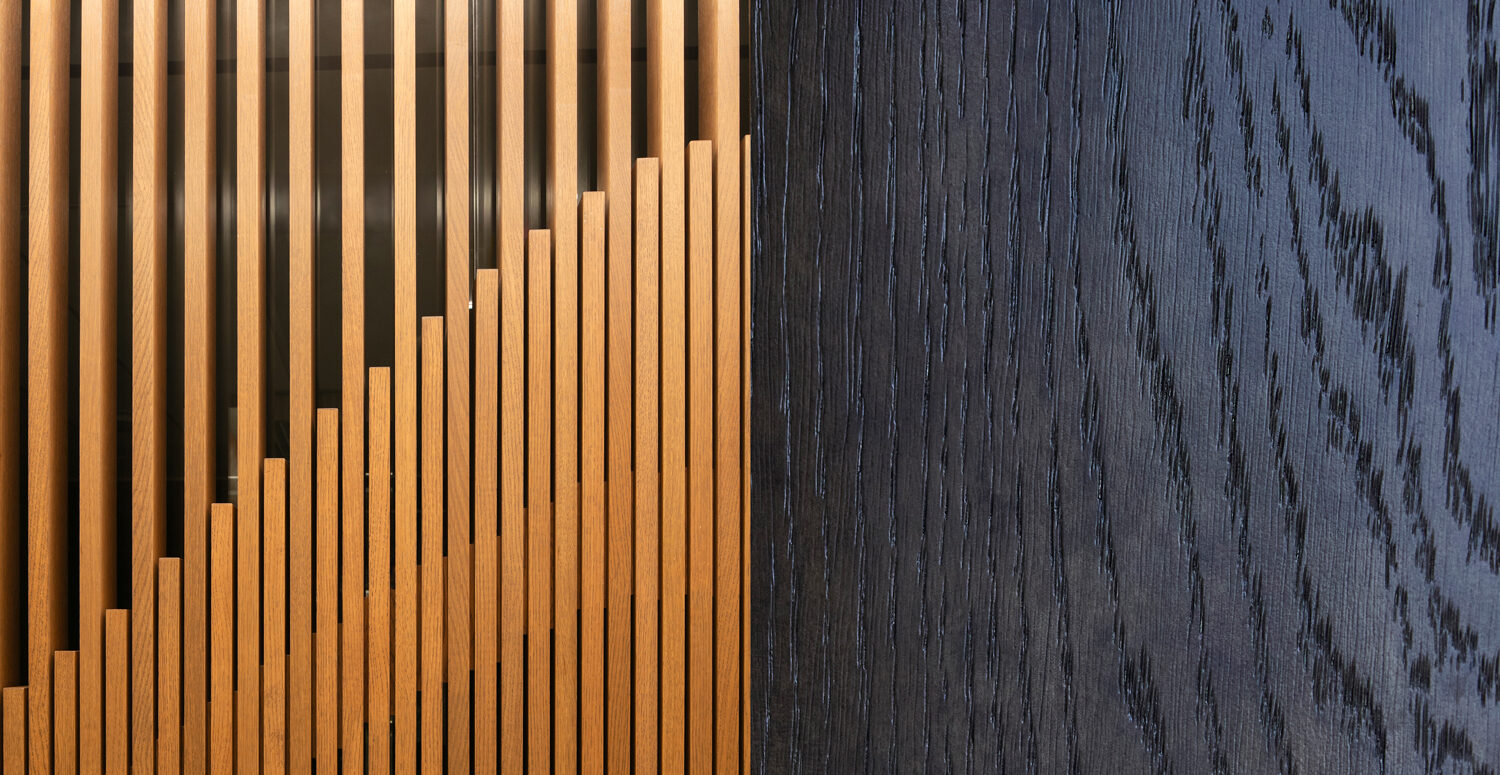
As designers continue to seek solutions that support sustainability and occupant wellbeing, mass timber and other bio-based materials are emerging as powerful tools for creating healthier, lower-carbon environments.
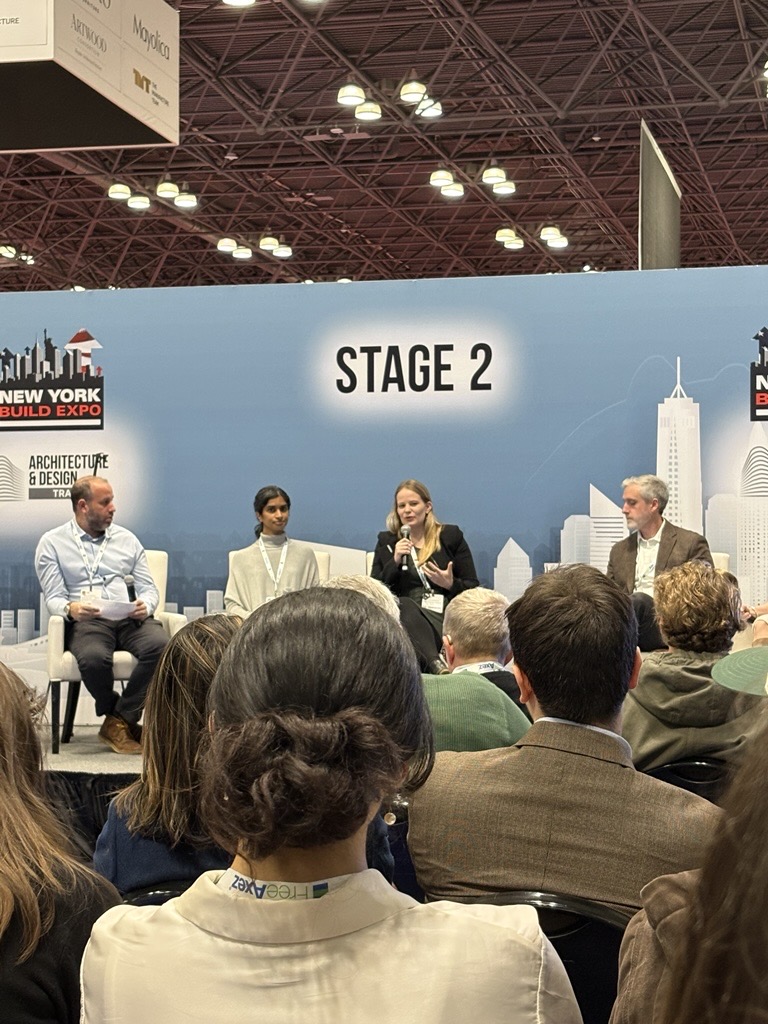
During the panel discussion Mass Timber, Biophilia, and the Return to Natural Materiality, Allison Bernett explored how natural materials can strengthen the relationship between people and place. Beyond their environmental advantages, materials such as mass timber contribute to biophilic design strategies that foster meaningful connections to nature. Research has shown that exposure to wood-rich environments can reduce stress and lower blood pressure, demonstrating the measurable impact that material choices can have on human health.
Mass timber also offers significant carbon benefits. Unlike conventional materials such as steel and concrete, timber requires substantially less energy to harvest and manufacture. As a bio-based material, it also stores carbon within its fibers, helping reduce a building’s embodied carbon footprint while supporting broader climate goals.
Importantly, adopting mass timber does not require an all-or-nothing approach. At the Soundview Recreation Center in the Bronx—which BEYOND is the sustainability consultant on and led participation in NYCEDC’s Mass Timber Studio program—a hybrid structural strategy combines steel and mass timber to maximize both performance and environmental benefit. While mass timber is utilized primarily for the facility’s long-span gymnasium roof, the selective integration of timber contributes to a 21% reduction in embodied carbon compared to a conventional all-steel structure when biogenic carbon is considered.
Projects like Soundview demonstrate that even targeted applications of natural materials can deliver meaningful environmental outcomes while creating spaces that feel warmer, healthier, and more connected to their communities.
Designing with Carbon as a Core Metric
While material selection plays a critical role in reducing environmental impact, achieving meaningful climate outcomes requires a broader shift in how projects are conceived and delivered.
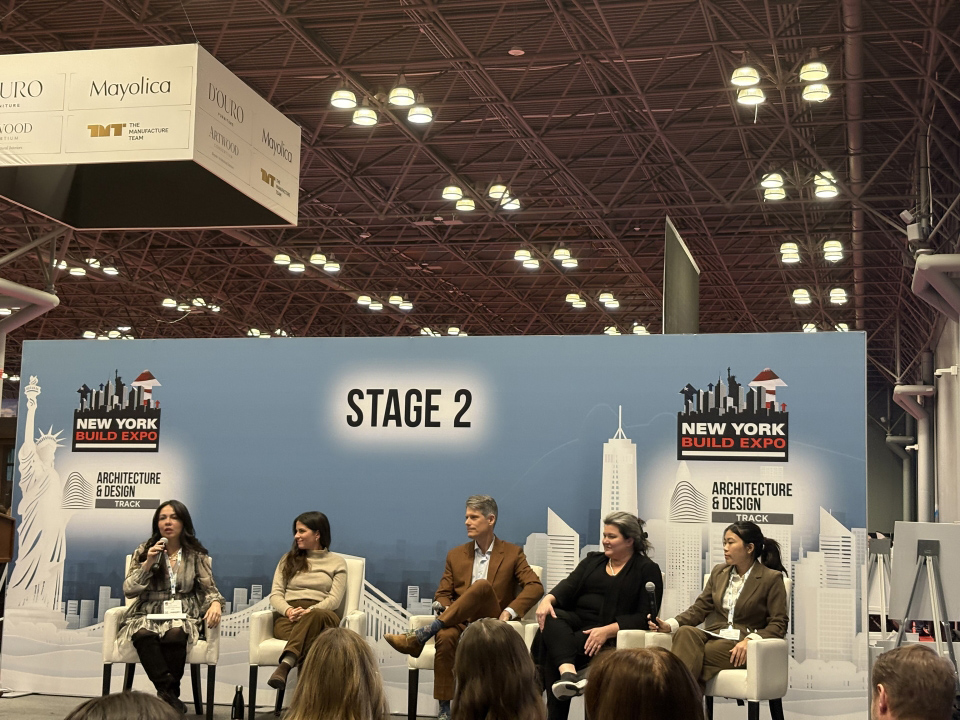
During the panel Designing with Carbon in Mind, Katia Lucuy emphasized that carbon decisions are fundamentally design decisions. The greatest opportunities to reduce emissions often occur during the earliest stages of a project, when teams are establishing goals, shaping building forms, evaluating systems, and selecting materials.
This perspective reflects a growing industry evolution: carbon is no longer an afterthought or a specialized sustainability exercise. It is becoming a core project metric alongside cost, schedule, and performance.
Meaningful carbon reduction also depends on collaboration. Owners, architects, engineers, contractors, and manufacturers each influence a project’s environmental impact. By bringing these perspectives together early, teams can identify opportunities that may otherwise be missed and make more informed decisions throughout the design process.
Equally important is recognizing the climate value of what already exists. Reuse, renovation, and adaptive reuse strategies often deliver greater carbon savings than new construction by preserving embodied carbon and extending the useful life of buildings and materials. As the industry continues to prioritize resilience and resource stewardship, these approaches are becoming increasingly vital components of low-carbon design.
At the same time, advances in environmental product declarations, life-cycle assessment tools, and carbon benchmarking platforms are transforming how design teams evaluate and measure impact. Access to better data allows architects and clients to move beyond assumptions and make decisions grounded in measurable outcomes.
Moving from Awareness to Action
The conversations at New York Build Expo reflected an industry at an important inflection point. Awareness of climate challenges has grown significantly over the past decade, but today’s leaders are increasingly focused on implementation.
Whether through the thoughtful integration of mass timber, the preservation and reuse of existing buildings, or the use of data-driven carbon analysis, designers now have more tools than ever to create meaningful change.
The future of design is not simply about building less harm. It is about creating lasting value for people, communities, and the planet.