Insight
When Sports Become Content: Designing the Future of Fan Engagement
As New York prepares for a summer on the global sports stage, the future of fan engagement is being shaped far beyond the arena.
From the Knicks winning the 2026 NBA championship to the US Open and the FIFA World Cup arriving in the New York metropolitan region, the city is once again proving itself to be one of the world’s premier destinations for sports. Yet while the spotlight remains fixed on athletes and venues, another transformation is taking place behind the scenes—one that is redefining how fans experience sports altogether.
Today’s sports organizations are no longer simply teams, leagues, or event operators. They are global content engines. Every game generates a continuous stream of live broadcasts, social media content, podcasts, documentaries, highlights, data-driven analysis, and immersive digital experiences that engage audiences long before and after the final score.
As the boundaries between sports, media, and entertainment continue to blur, the environments that support these experiences have become just as important as the venues where the competition occurs.
Sports Organizations Are Becoming Media Companies
For decades, sports content was largely confined to a live broadcast and a post-game recap. Today, audiences expect constant access across every platform and device. Fans consume sports through streaming services, social media channels, mobile applications, and dedicated digital platforms, creating demand for content that is immediate, personalized, and always available.
This shift is transforming the physical environments that support sports organizations.
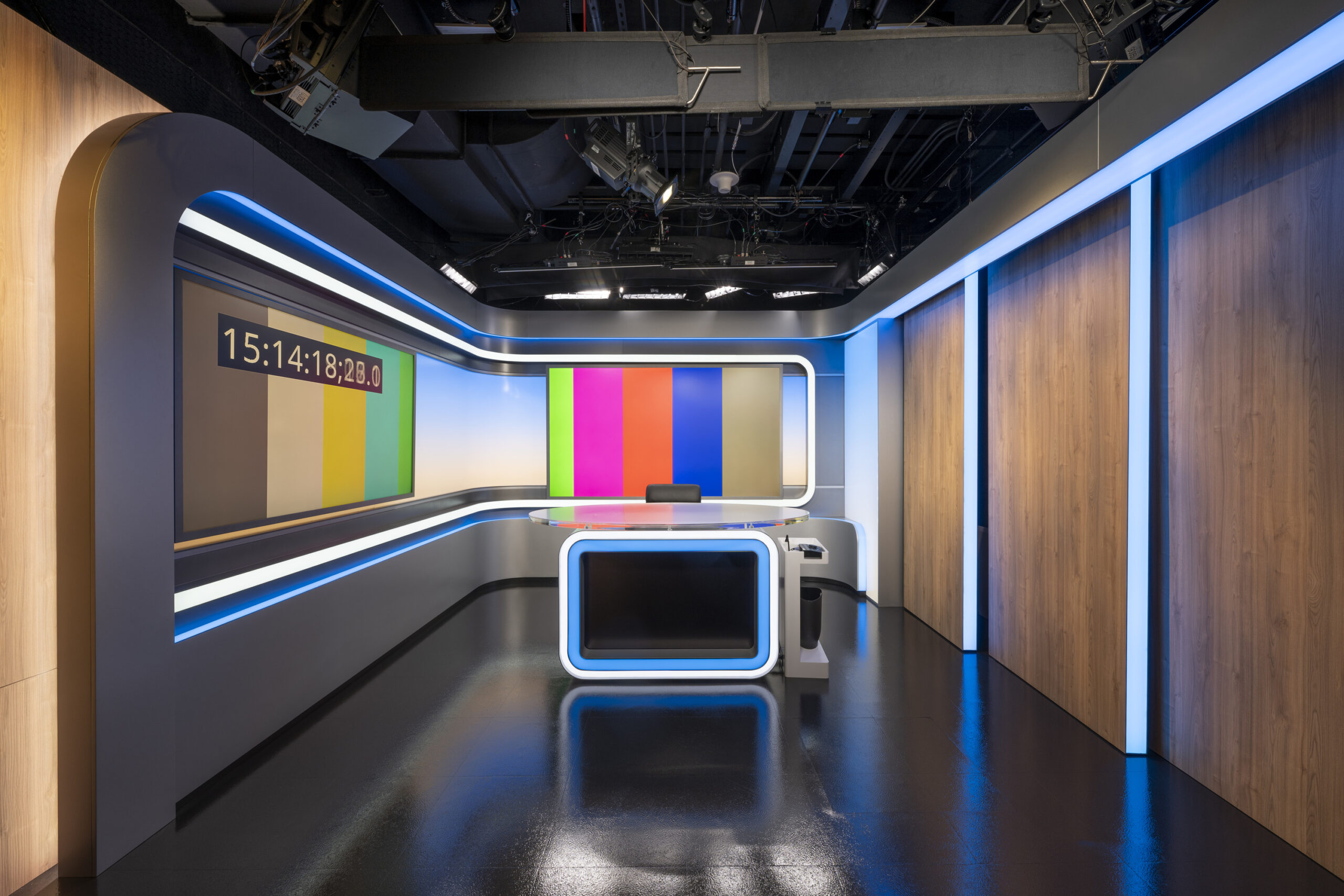
HLW’s design for PGA TOUR Studios exemplifies this evolution. The state-of-the-art media campus was conceived as far more than a traditional broadcast facility. Designed to support live production, digital content creation, social media programming, podcasts, and international broadcasts, the facility serves as a year-round storytelling hub for one of the world’s most recognized sports organizations.
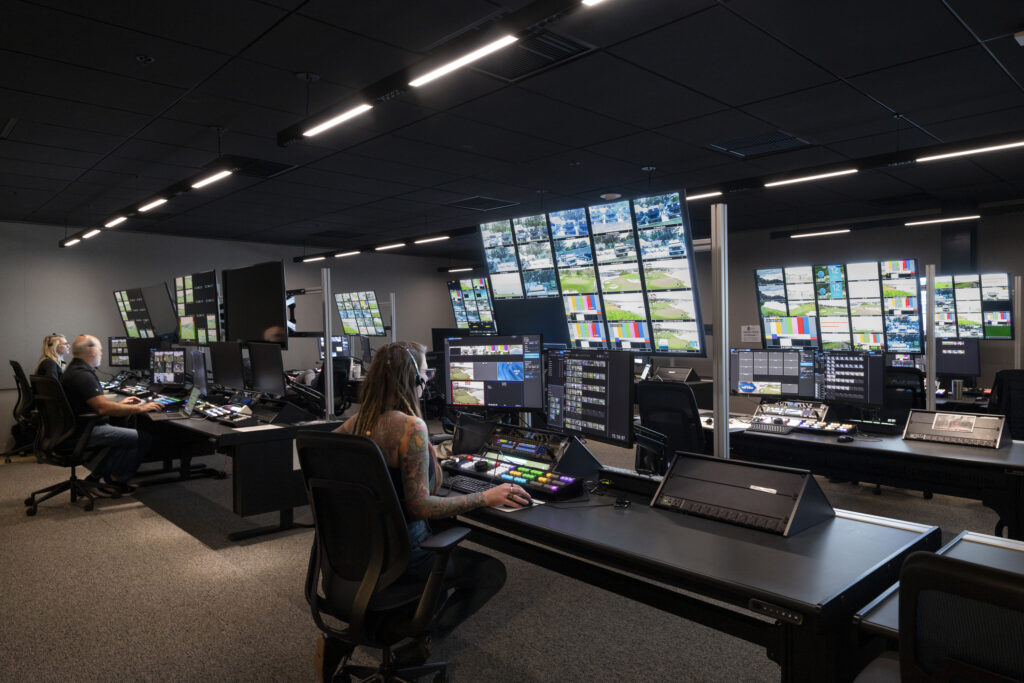
With multiple production control rooms, seven LED-equipped studios, and infrastructure capable of supporting thousands of hours of annual content, the project reflects a new reality: sports organizations increasingly operate as media companies, requiring highly flexible environments that enable content creation at every scale.
The future of sports is not only being played on the course, court, or field—it is being produced, edited, distributed, and experienced across an expanding ecosystem of platforms.
The Fan Experience Extends Beyond the Venue
While iconic venues remain central to sports culture, the fan experience now extends far beyond a seat in the stadium.
Many of today’s most engaged fans experience sports through broadcasts, streaming platforms, second-screen interactions, and digital communities. This evolution has elevated the role of sports media organizations, whose environments must support real-time storytelling, analysis, and audience engagement across multiple channels simultaneously.
HLW’s work for SportsNet New York (SNY) demonstrates the growing importance of these media environments. As one of the region’s most prominent sports broadcasters, SNY connects fans to the teams, personalities, and stories that define New York sports culture. The spaces that support these operations must balance technological sophistication with the flexibility required to adapt to rapidly changing media demands.
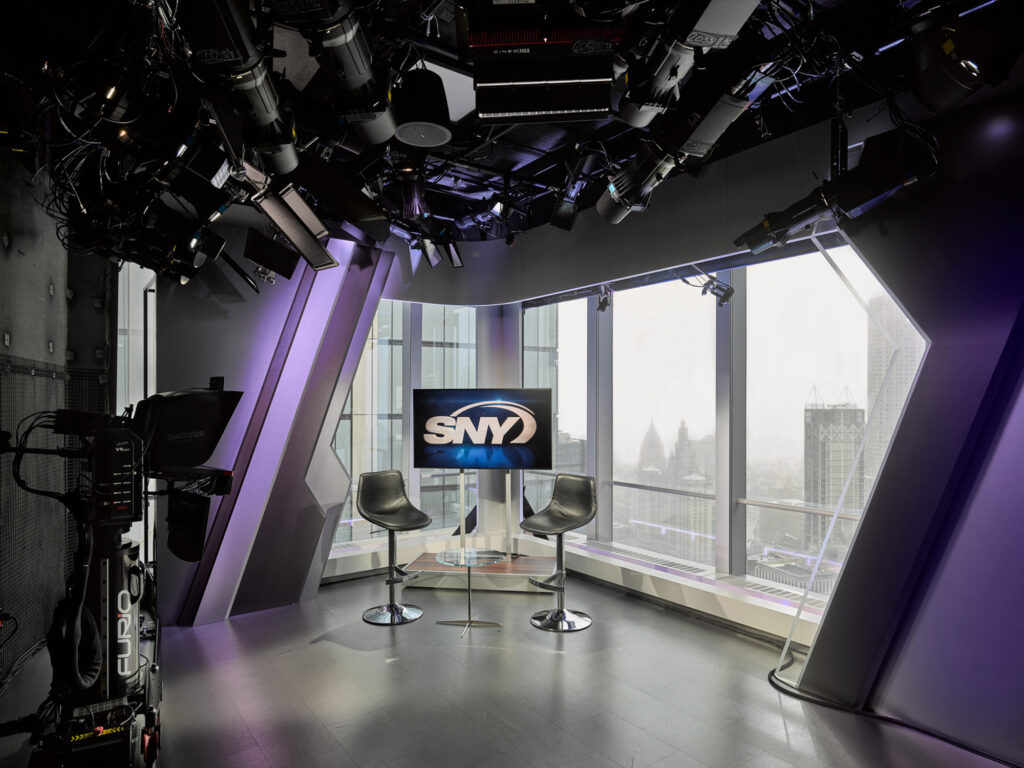
SportsNet New York (SNY) – New York, NY
This summer’s spotlight on New York sports serves as a reminder that the city is not only a host for major events—it is also one of the world’s most influential sports media capitals, where content reaches audiences far beyond the boundaries of any venue.
As sports continue to evolve into year-round entertainment properties, the environments that support broadcasting and content creation will play an increasingly important role in shaping how fans connect with the game.
Immersion Is the New Frontier
The next chapter of sports entertainment will be defined not only by access, but by immersion.
Audiences increasingly seek experiences that blur the boundaries between physical and digital worlds. Advances in visualization technology, virtual production, and experiential media are creating new opportunities for storytelling that place fans closer to the action than ever before.
HLW’s work on MSG Sphere Studios reflects this emerging future. Developed to support the creation of groundbreaking immersive content, the facility represents a new generation of production environments where technology and storytelling converge. These spaces enable creators to push beyond traditional formats and explore entirely new ways of engaging audiences.
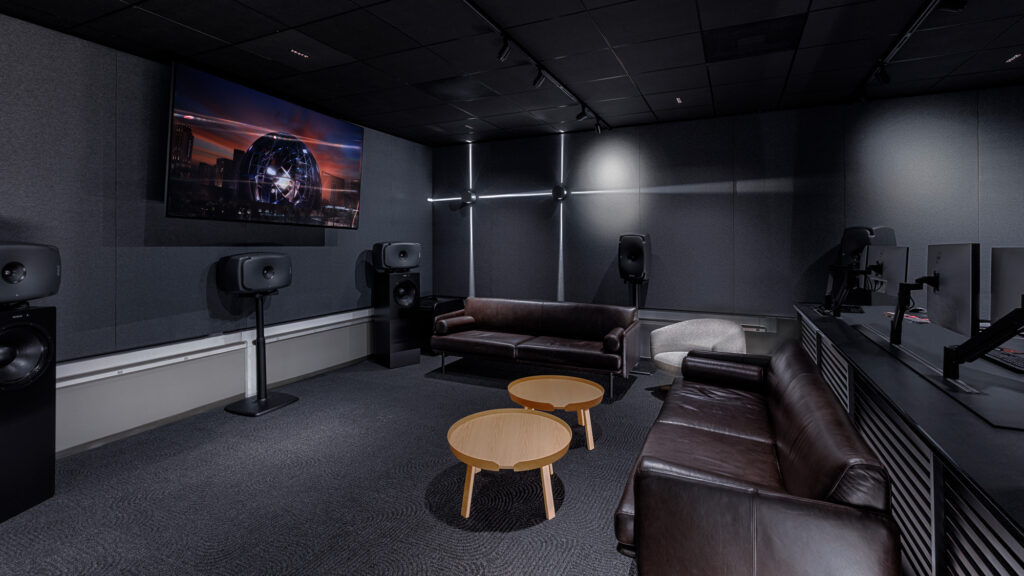
MSG Sphere Studios – Burbank, CA
The implications extend well beyond entertainment venues. The same technologies reshaping concerts, performances, and immersive attractions are influencing how sports content is produced, distributed, and experienced. As audiences become accustomed to richer, more interactive forms of engagement, organizations across the sports industry will continue investing in environments that support innovation and experimentation.
The future fan experience may not be defined by where someone sits—it may be defined by how deeply they can engage.
Designing for a New Era of Sports Entertainment
As New York welcomes some of the world’s most anticipated sporting events, it also offers a glimpse into a broader transformation occurring across sports, media, and entertainment.
The industry’s future will not be shaped solely by new stadiums or larger venues. It will be shaped by the interconnected ecosystem that surrounds them: production facilities, broadcast studios, content creation hubs, immersive environments, and technology-enabled workplaces that bring stories to life.
For designers, this presents an exciting challenge. The environments supporting sports entertainment must be increasingly flexible, technologically sophisticated, and adaptable to evolving audience expectations. They must support not only today’s forms of engagement, but those that have yet to emerge.
The most influential sports experiences of the next decade may begin long before a game starts and continue long after it ends.
And increasingly, they will be shaped by the places where content is created, stories are told, and fans become part of something larger than the event itself.