Insight
The Future of Smart Buildings
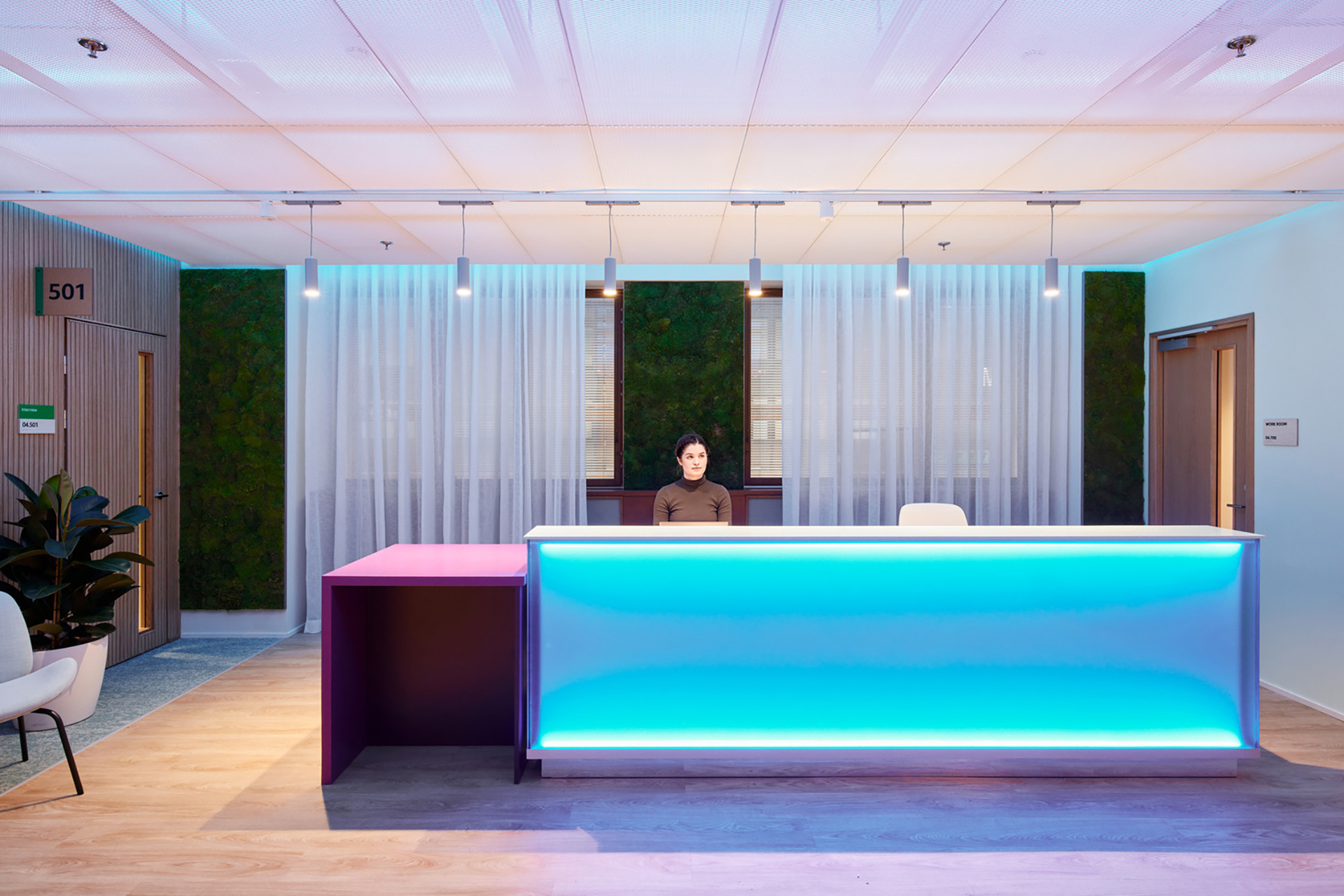
Smart buildings use technology to improve how people interact with space. Sensors, software, and connected systems work together to control lighting, air, temperature, and access. As buildings become more responsive, the role of design is shifting. Smart features are moving from novelty to standard expectation.
The future of smart buildings will focus less on automation for its own sake and more on how technology supports health, performance, and adaptability.
Smarter Systems, Better Data
New smart buildings are driven by data. Systems can now track how spaces are used, how energy is consumed, and how conditions change over time. This information can be utilized later in order to better support decisions about operations, layout, and maintenance.
For example, sensors can measure occupancy in real time. When linked to HVAC and lighting systems, this allows buildings to reduce energy use when areas are empty. Over time, this also helps teams understand patterns and adjust space planning.
User Experience at the Center
Future systems will be more focused on how people use space. Smart buildings are beginning to respond to individual needs by adjusting lighting, airflow, or room temperature based on user settings or presence. Mobile apps can help occupants reserve rooms, report issues, or adjust their environment with little effort. As these tools become more common, users expect control and feedback. Buildings that offer this level of responsiveness will be easier to navigate and more comfortable to use.
Supporting Hybrid Work
With more people working remotely part of the week, offices must respond to changing occupancy. Smart systems can track peak times, manage bookings, and adjust shared resources. This helps reduce wasted space and gives teams better access to the areas they need.
Technology also supports flexibility in layout. New buildings often include movable partitions, shared desks, and common zones that become easier to manage when linked to real-time data.
Planning for Longevity
The most useful smart features are those that remain relevant over time. Open systems, easy upgrades, and modular components help keep technology from becoming outdated. Designers and developers are beginning to plan for future changes by creating systems that can grow as needs evolve.
A New Standard for Performance
Smart buildings are no longer a niche category. They are becoming the model for how built environments operate and improve. As systems continue to develop, the most successful buildings will be those that combine responsive technology with clear purpose and long-term value.