Event
Designing for What Really Matters: Reflections from Workspace Design Show London
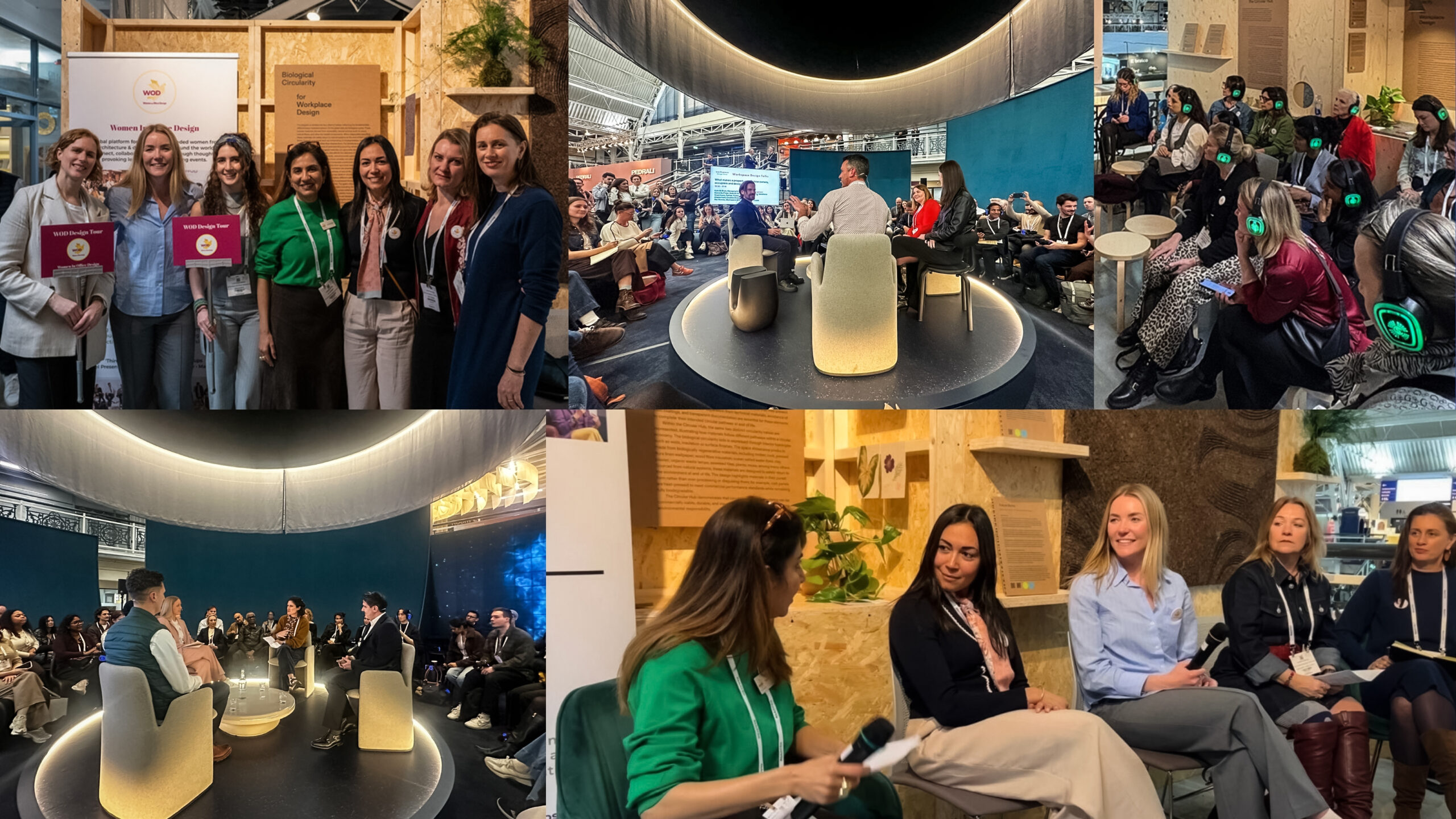
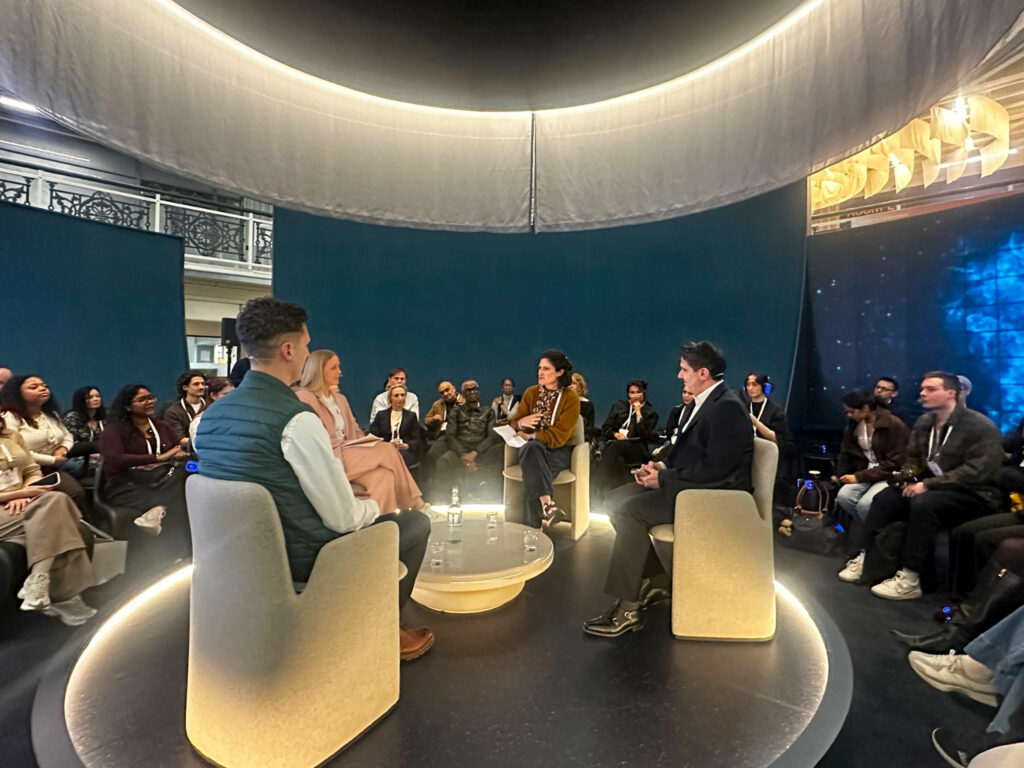
The Workspace Design Show in London is always an energising moment in the calendar. It’s a chance to step outside day-to-day project work and engage with the bigger questions shaping our industry. This year, I had the opportunity to join several conversations across the event, from panel discussions to informal exchanges that carried on long after the sessions ended.
What struck me most throughout the show was a shared recognition that workplace design is entering a new phase. For a long time, our industry has focused on efficiency, optimisation and aesthetics. But the conversations this year repeatedly returned to a more fundamental idea: the workplace must support the full spectrum of human experience.

Rethinking What Makes a Workplace “Right”
One of the final conversations of the day asked a deceptively simple question: what truly makes a property “right” for both owners and occupiers?
The discussion quickly moved beyond location or building quality. Instead, we explored how workplaces support strategy, culture and human connection.
One point that resonated strongly with me was the idea that innovation has quietly declined over the past few years. We’ve lost many of the spontaneous moments that once fuelled creativity; the ad-hoc conversations, the unexpected encounters and the sense of community that naturally emerged in the office. As organisations rebuild their workplace cultures, design now has to intentionally curate what used to happen organically.
Inclusion also surfaced repeatedly as a non-negotiable principle. Whether someone is participating in person or digitally, everyone should be able to contribute equally. The spaces we create and the technology within them must ensure every individual has an equitable seat at the table.
The conversation also raised an interesting perspective on productivity. Research from Harvard suggests we are truly productive for only two hours and fifty-three minutes each day. Rather than fighting that reality, perhaps the real question is: what should the office do with the other five hours?
For me, the answer lies in designing environments that support the full rhythm of human performance, spaces for focus, collaboration, recovery and connection. In many ways, workplace design begins to resemble preventative medicine: environments that support people on both their best days and their most challenging ones.
Inclusive Workplaces: Moving Beyond the Narrative
Another standout session explored whether inclusive and diverse workplaces are truly becoming reality or simply remaining a good story we like to tell.

Hosted by Jenn Celesia, the panel included several industry voices, including HLW’s Senior Interior Designer Samuel Edmonds, alongside Alex Lawlor and Gorka. It was fantastic to see Samuel contributing to a conversation that felt both practical and honest about where our industry currently stands.
Several insights from that discussion stayed with me. The first is the importance of data. Metrics, pilot spaces and user feedback allow us to move beyond assumptions and design based on real evidence. When we measure how spaces are used, we gain insights that can significantly improve workplace outcomes.
Leadership also plays a critical role. Inclusive workplaces rarely happen by accident. They require direction, sponsorship and accountability from leadership teams who genuinely prioritise inclusive environments.
What I appreciated most about the discussion, however, was the reminder that inclusive design does not always require large budgets. Often, small and thoughtful interventions can make a disproportionate impact, helping people feel more comfortable, supported and able to participate fully.
Most importantly, inclusive design requires us to listen widely. We must design for the full spectrum of users, not only those who already feel comfortable sharing their perspectives.
Anthropology in Design: Observing Before We Design
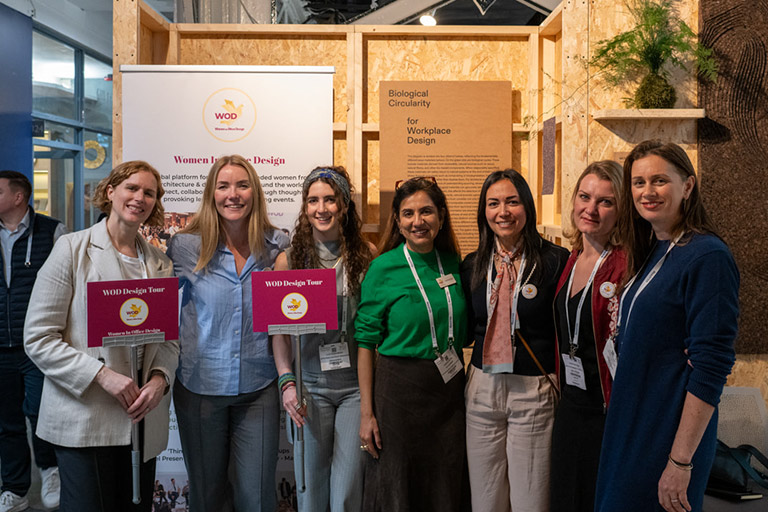
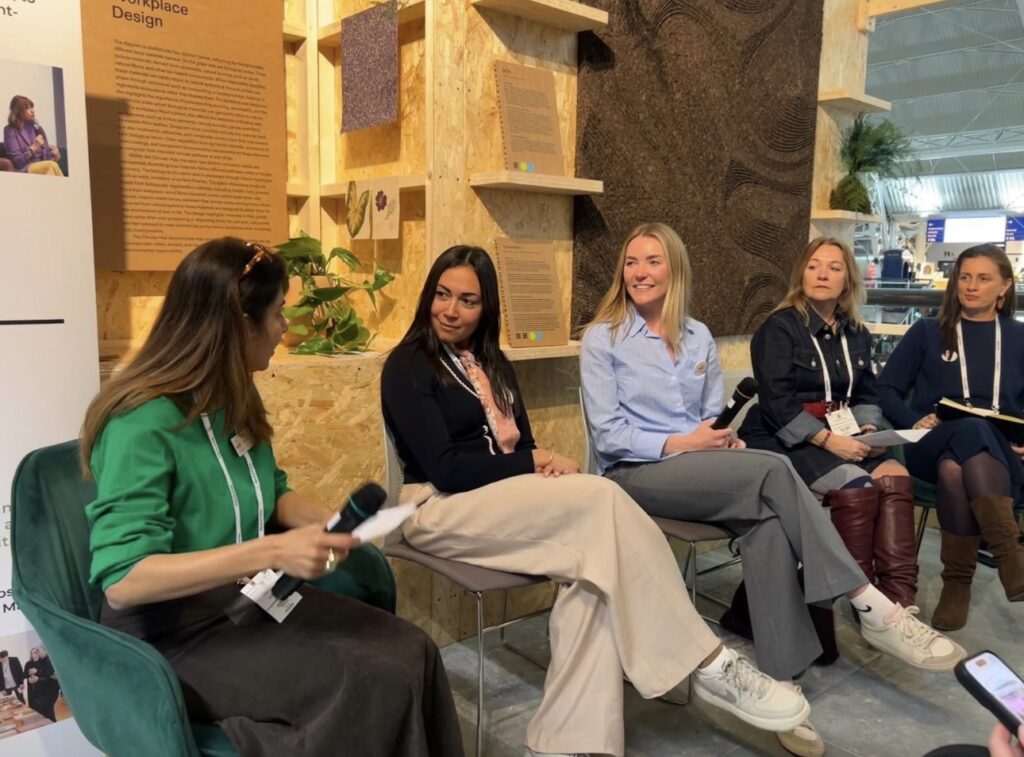
One of my favourite moments at the show was joining the Women in Office Design (WOD) panel on “Anthropology in Design.” It was a brilliant conversation with Jennifer Bryan, May Fawzy, Harsha Kotak, Lauren Thompson and Rosie Oliver about how behavioural insight can shape more meaningful workplaces.
Anthropology encourages us to start with observation rather than specification. Traditional briefs often tell us what a space needs to contain, but they rarely capture how people actually experience that space.
By paying closer attention to human behaviour: how people move, gather, adapt and interact, we can design workplaces that reflect real patterns rather than theoretical ones.
Importantly, embedding these insights doesn’t always require more time or budget. Often it simply requires greater intention. When we weave human-centred observation into the touchpoints that already exist within the design process, we create workplaces that reflect real behaviour rather than assumptions.
The result is environments that reduce risk, align more closely with user needs and work beautifully from the moment people move in.
Designing for the Whole Human Experience
Looking back across the show, one theme connected all of these conversations: the workplace is no longer defined solely by location or amenities. Instead, it is defined by its ability to support people.
Access to nature and community. Technology that supports equitable participation. Spaces that encourage connection while allowing for individual choice. Leadership behaviours that reinforce how spaces are intended to be used.
When these elements come together thoughtfully, the workplace becomes far more than a place to complete tasks. It becomes an environment that supports creativity, wellbeing and long-term performance.
For me, the biggest takeaway from Workspace Design Show London this year is simple: if we design for connection, inclusion, choice and human behaviour, innovation will return not by accident, but by design.