Insight
How to Encourage Collaboration in the Workplace
Collaboration is essential in many work environments, especially in teams that solve complex problems or develop new ideas. While some collaboration happens naturally, much of it depends on how space, culture, and tools are aligned. To support better collaboration, each of these elements needs to be intentional. Promoting collaboration means creating the right conditions, not forcing constant interaction. It’s about allowing people to share ideas when needed and focus when they need space to think.
Design for Interaction
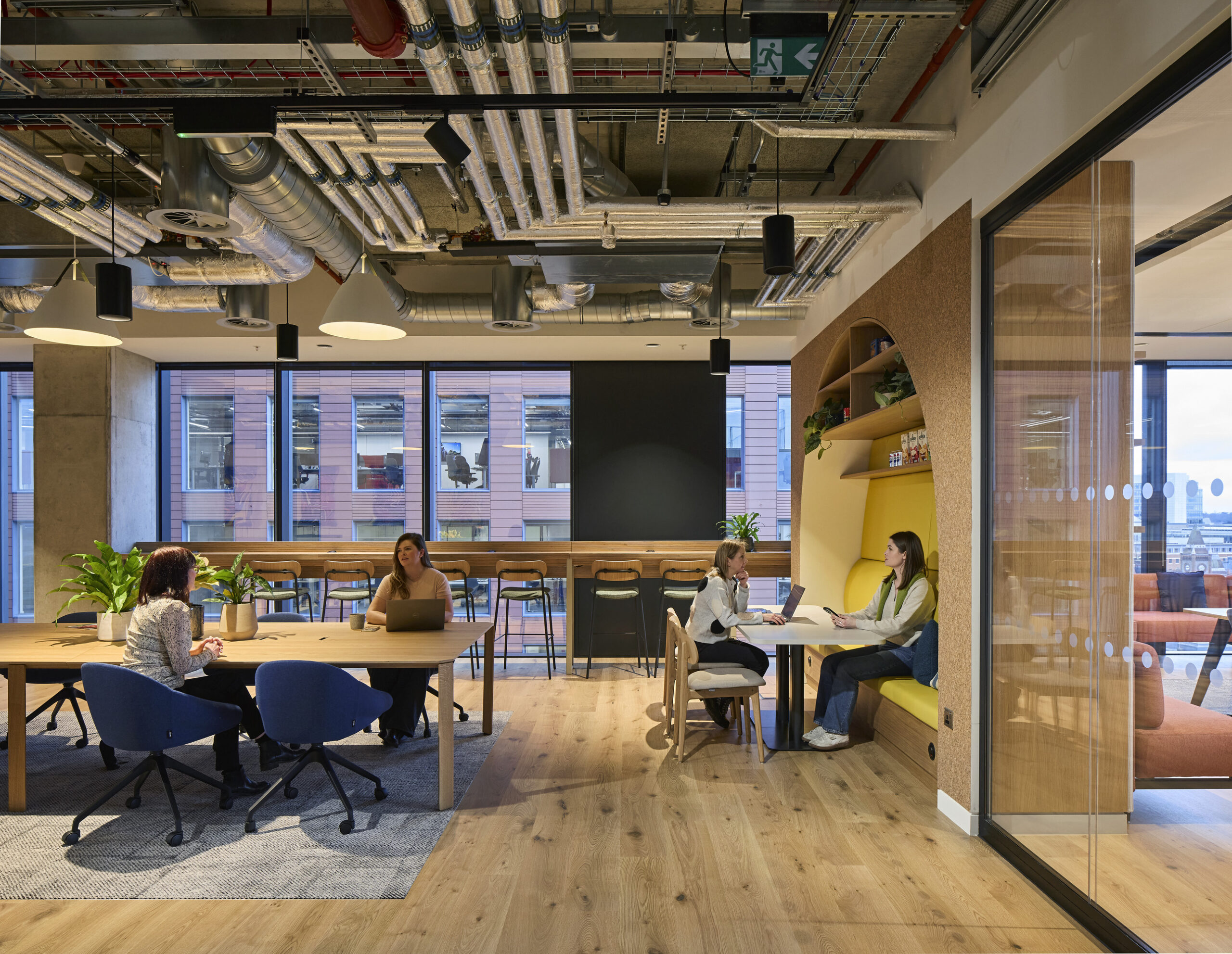
Physical space plays a large role in how teams connect. Open layouts can make it easier to see and approach others, but they should be balanced with areas for quiet work. Offering a variety of spaces, whether it is small meeting rooms, shared tables or informal lounges, encourages people to interact in ways that feel natural and suited to the moment.
The design should support movement. When people pass each other throughout the day, conversations start more naturally. Clear circulation paths, central stairs, and shared resources placed in common areas can all encourage more face-to-face moments.
Offer a Range of Spaces
Different kinds of work call for spaces that support a range of activities and levels of focus. Teams benefit from environments that allow them to shift between collaboration and independent thinking as needed. Providing a mix of rooms and areas helps collaboration happen without disrupting focus. Some ideas take shape around a table, while others begin as quiet thoughts later shared in a meeting. When people have access to a variety of settings, they are more likely to find one that fits the task at hand.
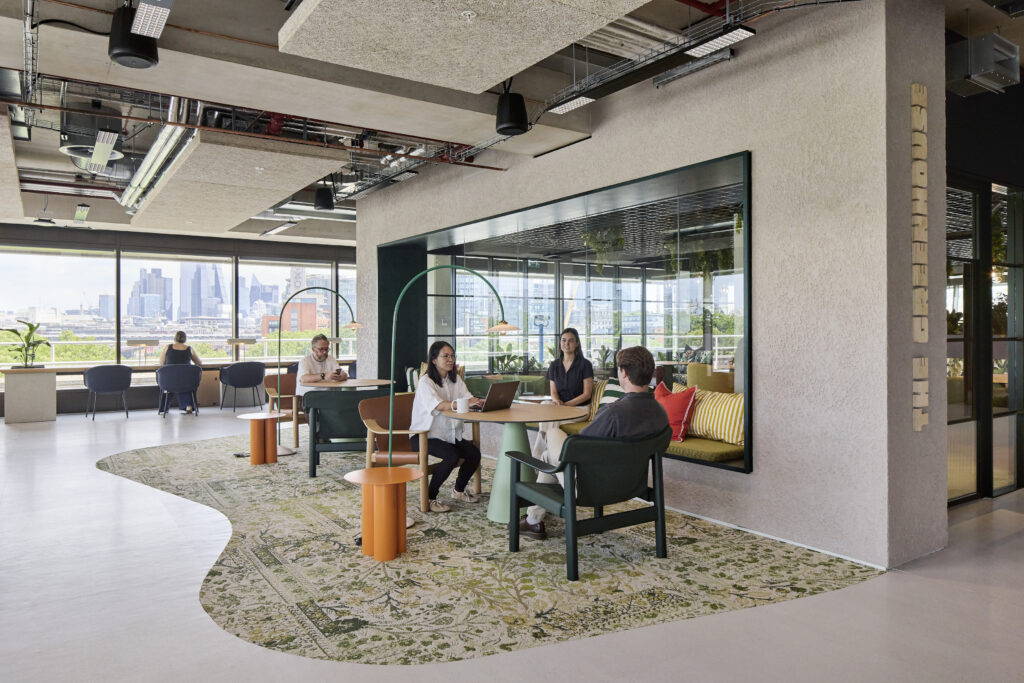
Financial Technology Client, London, UK
Make Tools Easy to Use
Technology encourages collaboration when it functions smoothly and fits easily into daily routines. Tools that support communication and shared workspaces help teams stay connected, even when they are not in the same place. If tools are difficult to use or hard to access, people often avoid them. Making these tools available in meeting rooms, common spaces, and even casual areas supports more fluid collaboration throughout the day.
Create Time and Trust
Space and tools matter, but trust plays an equally important role. Teams need time to connect and room to speak freely. This kind of openness develops over time and is shaped by leadership and culture. People collaborate more when they feel their ideas are valued. Supporting this kind of environment can be as simple as encouraging regular check-ins or creating opportunities for informal conversation.
Shaping the Right Conditions
Promoting collaboration often begins with a clear understanding of how people work together. By aligning the environment with those patterns, teams are more likely to connect, share ideas, and stay engaged in the process.