Insight
Designing for Tomorrow: Sustainability in Interior Design
Sustainability in interior design has evolved from a trend into a core responsibility for architects and designers. As organizations reconsider how their spaces impact people and the planet, interiors are increasingly becoming a critical platform for environmental stewardship. Thoughtful design decisions—from material selection to spatial planning—can significantly reduce environmental impact while creating healthier, more inspiring environments for occupants.
At its core, sustainable interior design begins with intentional material choices. Designers are prioritizing low-carbon materials, recycled and rapidly renewable resources, and products with verified environmental certifications. Finishes with low or zero volatile organic compounds (VOCs) improve indoor air quality, while responsibly sourced wood and recycled metals reduce pressure on natural ecosystems. Increasingly, designers are also embracing the principles of the circular economy by specifying materials that can be disassembled, reused, or repurposed at the end of their lifecycle.
Adaptive reuse and renovation play an equally important role in sustainable interiors. Rather than starting from scratch, many design teams are transforming existing spaces to meet modern needs. Retaining structural elements, repurposing materials, and celebrating a building’s original character can significantly reduce embodied carbon while creating spaces rich with history and authenticity. This approach not only minimizes waste but also reinforces the cultural and architectural narratives embedded within existing structures.
Energy efficiency is another critical component of sustainable interiors. Lighting strategies that maximize daylight, high-performance LED fixtures, and smart building systems all contribute to reduced energy consumption. Interior layouts that support flexible workstyles can also extend the life of a space, ensuring it remains adaptable as organizational needs evolve. By designing with flexibility in mind, interiors can accommodate change without requiring extensive renovation in the future.
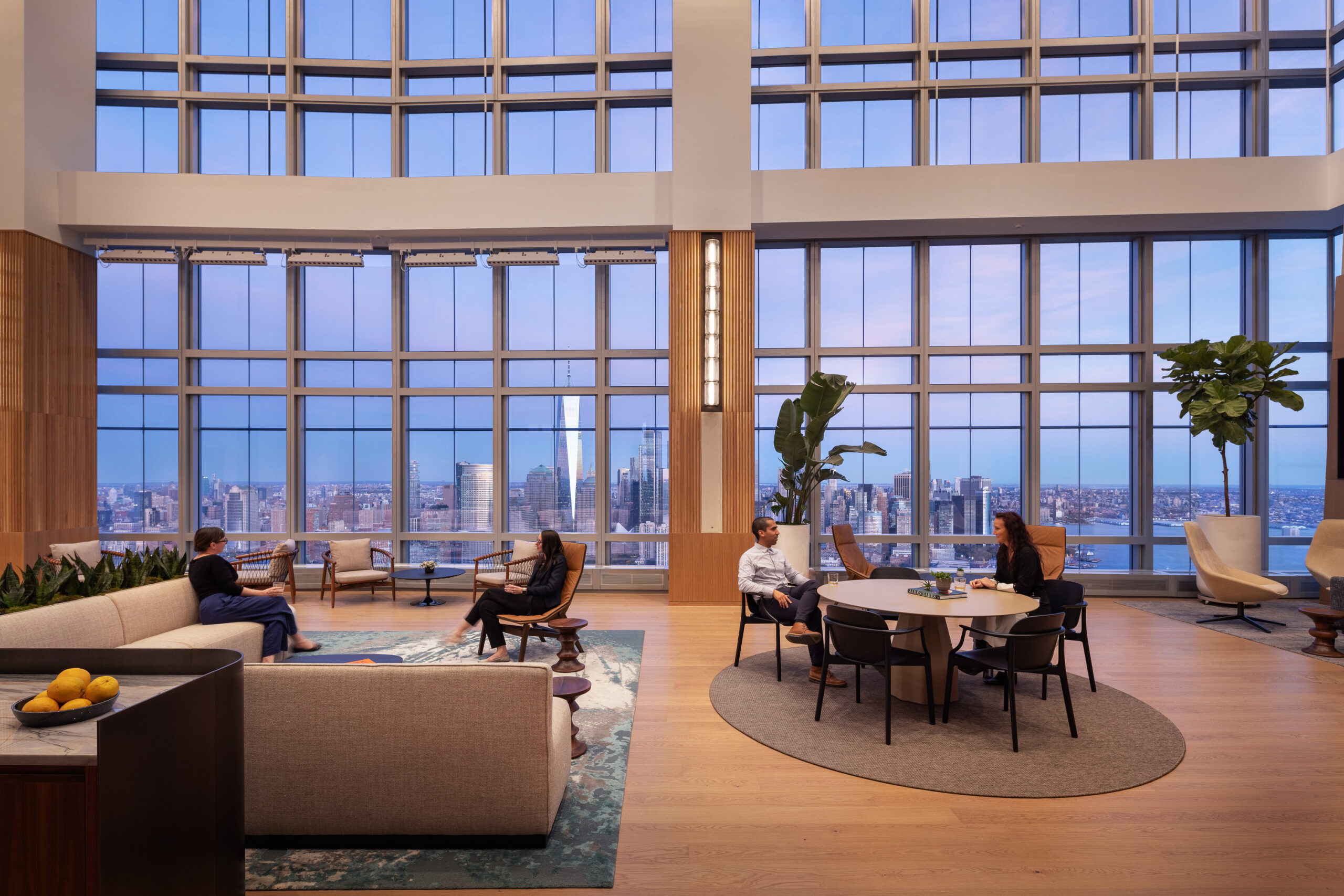
Equally important is the human dimension of sustainability. Healthy interiors support occupant well-being through improved air quality, access to natural light, acoustic comfort, and connections to nature. Biophilic design strategies—such as integrating natural materials, greenery, and views to the outdoors—have been shown to enhance productivity, reduce stress, and create more engaging environments. In this way, sustainability is not just about environmental performance; it is also about designing spaces that support the people who inhabit them every day.
Technology and data are also shaping the future of sustainable interiors. Designers now have access to advanced tools that measure the carbon footprint of materials, evaluate lifecycle impacts, and model environmental performance. These insights enable more informed decisions throughout the design process and help teams align their work with broader environmental goals, including corporate ESG commitments and certifications such as LEED, WELL, and Fitwel.
Ultimately, sustainability in interior design is about long-term thinking. It requires balancing environmental responsibility, human experience, and design excellence. When these elements come together, interiors become more than functional spaces—they become platforms for innovation, resilience, and positive impact.
As organizations continue to prioritize environmental performance, sustainable interiors will play an increasingly vital role in shaping workplaces, institutions, and communities. Through thoughtful design, architects and interior designers have the opportunity to create spaces that not only serve today’s needs but also contribute to a healthier, more sustainable future.